Creating Intentional Visual Narratives for Travel
Your travel photos tell a story. The question is: what story are they actually telling?
5/7/20262 min read
I want to ask you something. When you look at your brand's travel imagery, does it tell a story? Or does it just show a place?
There's a real difference, and it matters more than most people in the travel industry realise.
One of the things I find myself doing in any city is sitting and watching. Just watching. How people move. The rhythms of a market. The way a street changes from morning to afternoon. The moment a local does something so habitual they don't even register it. These observations don't make it into every photograph, but they inform all of them. They're the reason some travel photography feels like it was made by someone who genuinely knows a place, and other travel photography just feels like a brochure.
A visual narrative isn't a collection of beautiful images. You can have technically perfect photography — the right exposure, the right composition, beautifully edited — and still end up with something that doesn't connect. Something that looks good in isolation but doesn't add up to anything. Doesn't make someone feel anything.
What travel visual storytelling is actually about is sequence, contrast, and intention. It's about knowing the emotional journey you want to take your audience on, and then building images that move them through it. The establishing shot that puts someone in a place. The detail that makes that place feel textured and real. The human moment that makes it feel alive. The wider shot that gives context. The quiet image that makes someone want to stay.
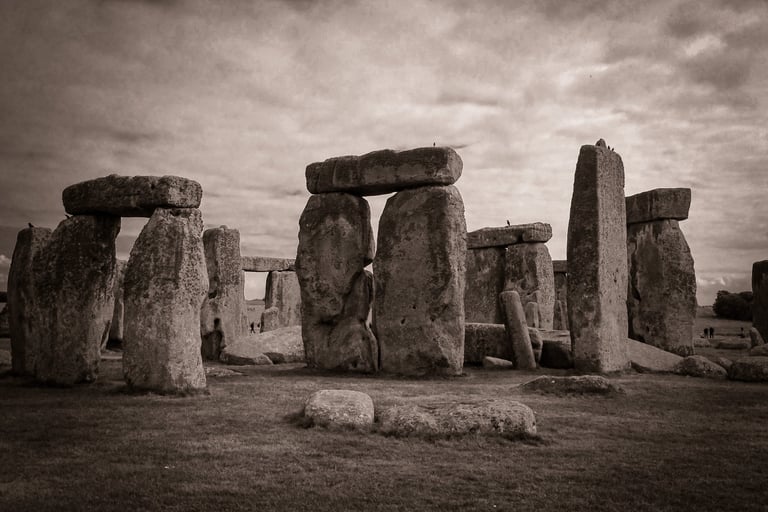
England does this to me in a particular way. You can stand in a field
next to a Neolithic monument and feel something that you cannot
get from reading about it or looking at a photograph of it. The history
isn't just visible — it's present. It's in the ground. That sensation of
being inside history rather than just looking at it from the outside is
something I think about a lot when I'm composing a shot. How do
you create that feeling in a two-dimensional image? How do you make someone feel like they're actually there, not just looking at somewhere?
The answer is usually in what you choose not to show as much as what you do. The tighter frame that removes distractions and forces attention. The angle that makes a building feel the way it felt to build it rather than just the way it looks on a map. The moment of stillness in a busy place that gives someone permission to actually look.
For travel brands, this approach means going into a shoot with a clear sense of narrative, not just a location list. What do you want someone to feel at the beginning of their experience with your content? What do you want them to feel at the end? What's the story your brand tells about travel — is it adventure, discovery, luxury, authenticity, belonging? And are your images actually telling that story, or are they just showing places?
If your travel content isn't performing the way you'd expect — if engagement is low, if people aren't stopping and looking — it might not be a strategy problem. It might be a story problem. And that's a much more interesting thing to fix.
Atmospheric Travel & Brand Photography
Location:
Based in Surrey, UK - working worldwide